Overhead cranes and gantry cranes are widely used in industrial production, and the requirements for their control systems are becoming increasingly demanding. To ensure the safe, stable, and efficient operation of overhead and gantry cranes, dedicated frequency converters (also known as VFDs) have become an indispensable component. This article will detail the advantages of crane frequency converters.
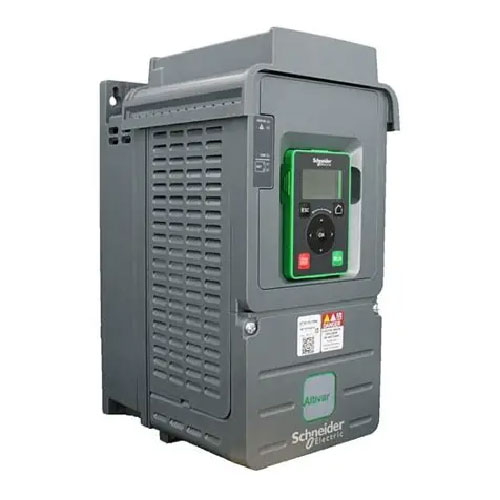
First, below is the total table for the sum:
| Characteristic | No VFD | Include VFD |
| Start/Stop | Direct start: huge impact, large mechanical vibration | Smooth soft start/stop: no effect, stable operation |
| Speed Control | Stepped speed regulation (usually 2-3 speeds), poor precision | Stepless smooth speed regulation, high precision, capable of achieving extremely low-speed “micro-motion.” |
| Operating Performance | Large load fluctuations make positioning difficult and time-consuming. | Smaller load fluctuations allow for precise positioning and significantly improved efficiency. |
| Electrical Shock: | High starting current (5-7 times rated current), impacting the power grid. | Low starting current (<1.5 times rated current) protects the power grid and equipment. |
| Energy Efficiency | High energy consumption; energy is wasted as heat during resistance speed regulation. | Significant energy savings (especially during speed reduction, energy can be fed back to the grid). |
| Maintenance Costs | Contactors, resistors, and brakes wear out quickly and have a high failure rate. | Minor electrical and mechanical shocks extend equipment life and reduce maintenance requirements. |
| Safety | Relying on mechanical braking results in high impact and lower safety. | Control braking, anti-slippage, and multiple electronic protections provide high safety. |
| Cost | Low initial investment | High initial investment, but low long-term operating costs |
Second, detailed difference analysis
1. Start-up and Stopping (The Most Obvious Difference)
Direct Start: The motor instantly receives full voltage, generating a huge inrush current and torque. The entire metal structure and transmission mechanism (such as gears and shafts) will experience a violent “clang.”
Direct Stop: Relies on the mechanical brake to lock instantly, causing the overhead and gantry crane body and load to shake violently.
Soft Start: The frequency converter’s output voltage and frequency rise smoothly from low to high, the motor torque increases smoothly, and the overhead and gantry crane “gradually applies force,” reducing the starting impact to almost zero.
Soft Stop: The motor speed smoothly decreases to zero, and then the brakes engage, achieving a “smooth stop.”
2. Speed Control (A Leap in Performance)
A limited number of speeds (e.g., high, medium, and low) are typically achieved by switching rotor circuit resistance. Speed switching is discontinuous and jerky.
Stepless speed regulation between 0Hz and the rated frequency is possible. Operators can precisely control lifting and running speeds, much like pressing an accelerator pedal in a car. This is crucial for scenarios involving precision installation, alignment, and handling fragile items.
3. Load Control and Anti-Sway Function
During startup and shutdown, the load (hook and cargo) swings dramatically like a pendulum, requiring the operator to repeatedly “jog” the overhead and gantry crane to eliminate the sway, which is inefficient and dangerous.
Through advanced vector control algorithms, load sway can be actively suppressed. Some high-end frequency converters also integrate anti-sway functions, automatically calculating and controlling the trolley’s start-stop curve, ensuring the hook lifts and lowers almost vertically, greatly improving work efficiency and safety.
4. Energy Efficiency and Braking
At low speeds, a large amount of electrical energy is consumed by external resistors, converted into useless heat. When lowering heavy objects, gravitational potential energy is also dissipated through friction in the brake system.
Energy saving: Always operates at high efficiency. Energy feedback: When lowering heavy objects, the motor becomes a generator. The frequency converter can feed this regenerated electrical energy back into the factory grid for use by other equipment, achieving significant energy savings (especially under frequent lifting conditions, energy savings can reach 20%-40%).
5. Protection and Maintenance
Protection functions are simple (such as overload and thermal protection), and frequent impacts accelerate the fatigue and damage to the mechanical structure.
Built-in comprehensive protection against overvoltage, under voltage, overcurrent, overload, phase loss, and motor stall. Smooth operation greatly extends the lifespan of mechanical components such as wire ropes, gearboxes, and brake pads.
Third, how to Choose the VFD (Whether you need to add the VFD)?
1. Extremely low usage frequency (e.g., maintenance workshops used only a few times a year).
2. Very limited budget.
3. Situations where there are no requirements for operational stability or positioning accuracy.
1. Workshops, warehouses, or production lines with heavy workloads and frequent use.
2. Situations requiring precise positioning (e.g., machine tool loading and unloading, assembly stations).
3. Lifting delicate, valuable, or fragile items.
4. Lifting molten metal (e.g., molten steel ladles) or situations requiring anti-sway operation.
5. Limited grid capacity, concerns about tripping due to startup shock.
6. Desiring to reduce long-term maintenance and energy costs.
Although adding a frequency converter increases the initial investment, the resulting improvements in safety, efficiency, maintenance costs, and energy savings make it a highly cost-effective long-term investment in most industrial applications. It is an inevitable trend in the development of modern crane technology.
Dejun Cranes has more than 30 years in crane filed, we have enough confidence to provide the top quality crane and suitable solution, any questions, contact us freely, our team always here!